Hungary's Political Earthquake: Orban Ousted After 16 Years
A pro-European landslide reshapes EU dynamics and opens a new chapter for Central European politics.
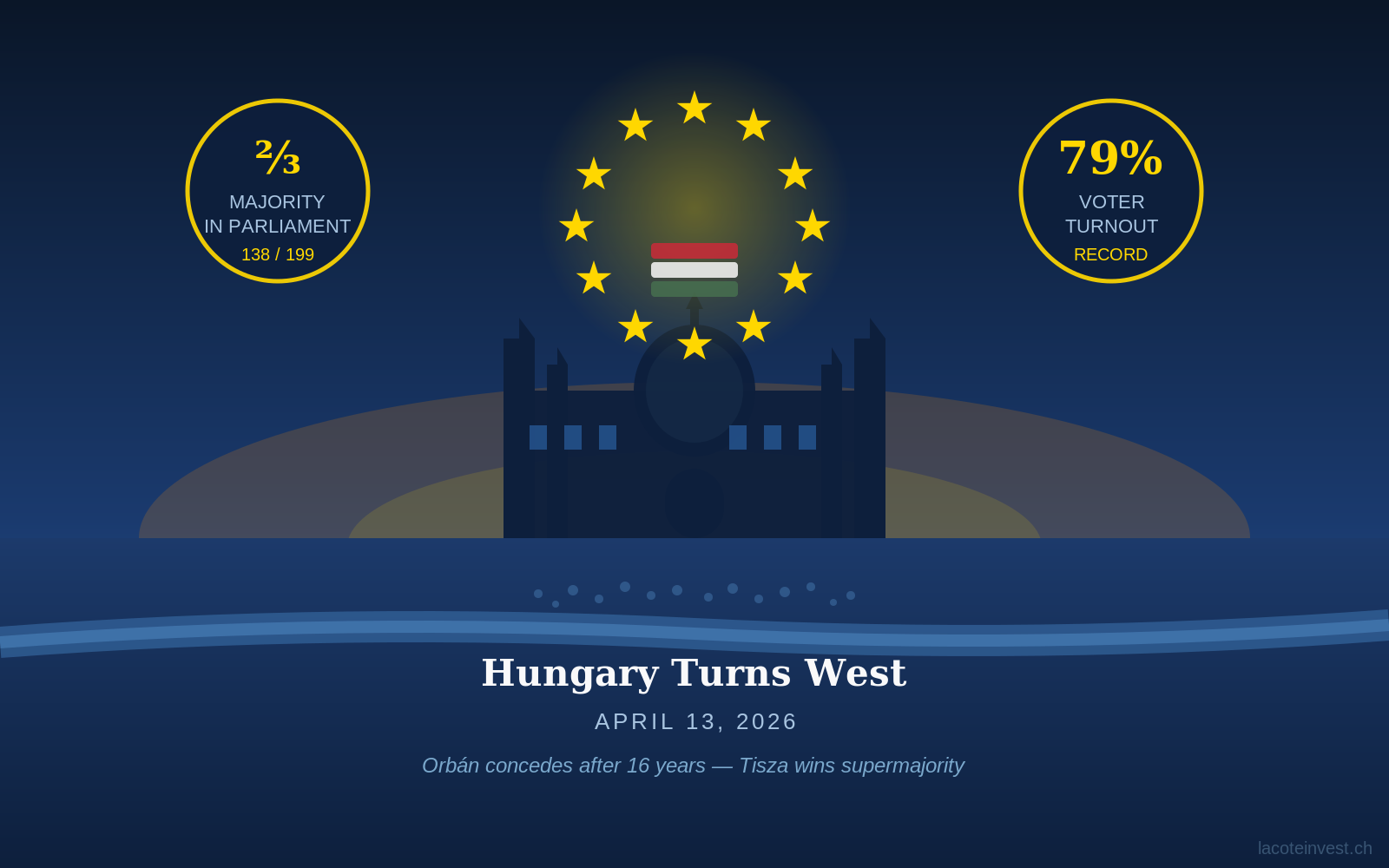
Hungarian voters delivered a historic verdict on Sunday, handing Peter Magyar's pro-European Tisza party a commanding two-thirds majority in parliament — roughly 138 of 199 seats. After sixteen years in office, Prime Minister Viktor Orban conceded defeat amid record turnout approaching 79%, driven by widespread frustration with economic stagnation, oligarchic enrichment, and media reports of alleged Kremlin ties. The result carries significant implications beyond Hungary's borders. Brussels, which clashed repeatedly with Orban over democratic backsliding, can now expect a more cooperative partner in Budapest. A long-blocked EU aid package of around 90 billion euros for Ukraine may finally move forward, and frozen EU structural funds for Hungary could be unlocked — with tangible effects on Central European markets and investor sentiment.