Markets Cheer the Ceasefire — But the Real Risks Are Just Beginning
Global stocks surged over 3% on the Iran truce, yet bond markets and inflation swaps quietly signal that the economic fallout is far from resolved.
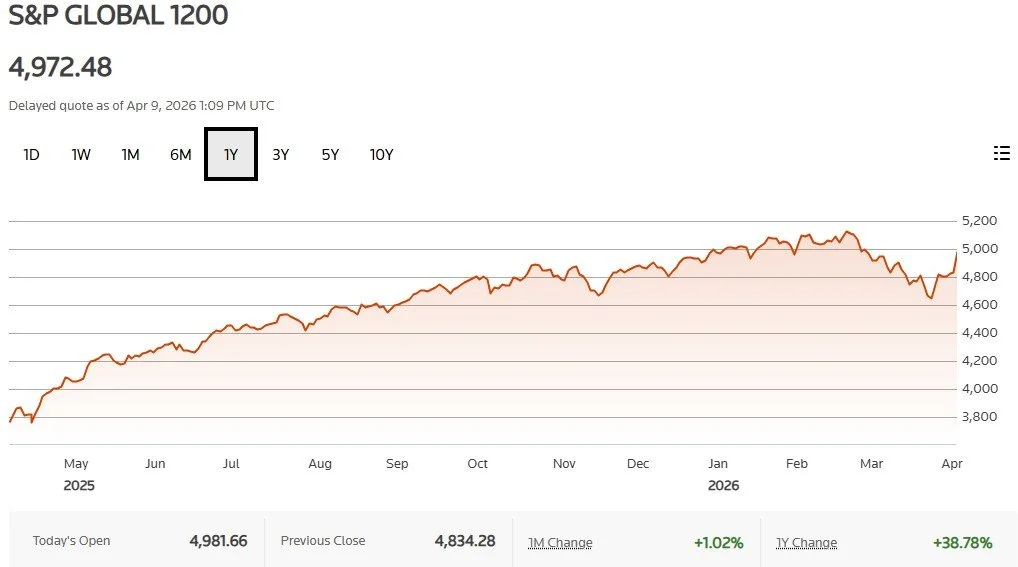
The announcement of a temporary ceasefire in the US-Iran conflict triggered one of the strongest single-day global equity rallies in years: world stocks gained over 3% and Brent crude fell more than 12%. Emerging markets recorded their best session since November 2022, recovering from approximately $60 billion in outflows during the conflict. However, fixed-income and inflation markets tell a more cautious story. Swap markets now price inflation above 3% for the coming year — up from under 2.25% at the start of 2026 — and the Federal Reserve is expected to keep rates unchanged throughout the year, erasing the two rate cuts that had been fully priced in before hostilities began. The structural concern centers on Iran apparently establishing a new precedent: the right to charge ships to transit the Strait of Hormuz — a principle that would have been dismissed as unacceptable just weeks ago. Analysts recommend a dual approach: selectively participate in the relief rally while positioning portfolios for a world defined by higher costs, persistent energy disruption, and more selective stock-picking.