
OECD Economic Outlook – September 2026
Weathering Successive Shocks
Introduction
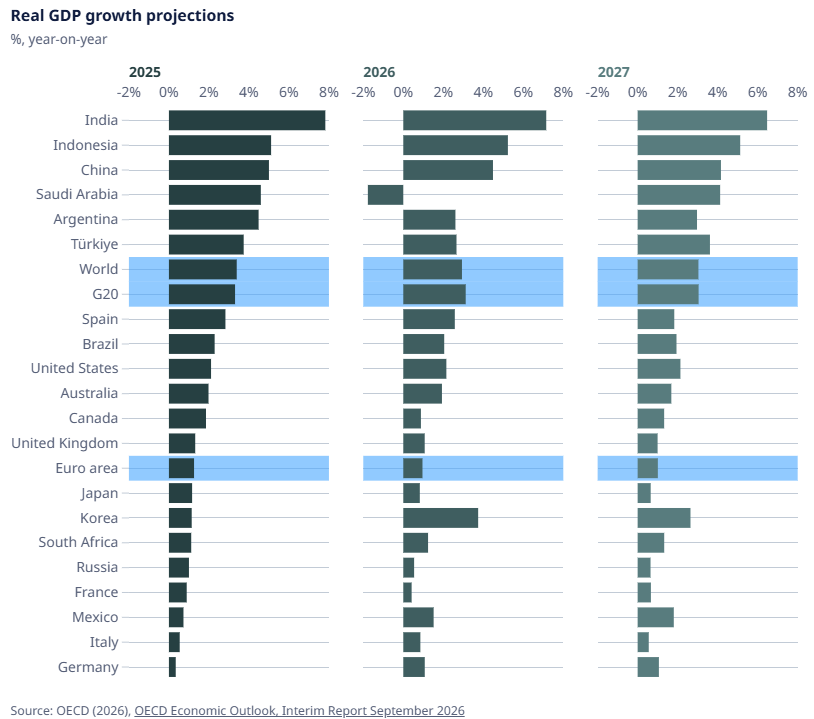
Global growth eased in the first half of 2026 but proved more resilient than anticipated. The economic fallout from the Middle East conflict was contained by substantial oil inventories, additional supply from outside the Gulf region and government support measures. Continued strength in AI-related investment also helped sustain production, trade and growth.
Key figures
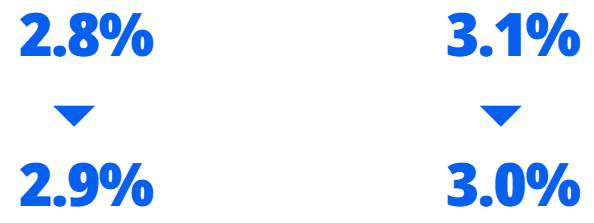
Global GDP growth projections see a modest upward revision for 2026, but are revised down in 2027
Global GDP growth is projected to be 2.9% in 2026 and 3.0% in 2027. Stronger price pressures, weaker real income growth and higher interest rates will moderate near-term growth momentum in many economies, but robust AI-related activity and an assumed easing of energy prices in line with futures markets next year will help activity strengthen through 2027.
Downside risks remain significant.
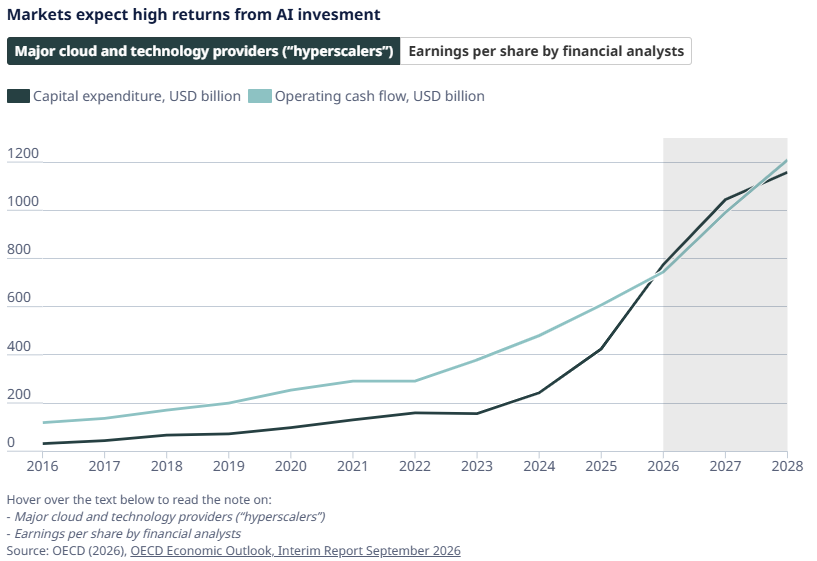
More persistent disruptions to Middle East energy exports, or weather-related supply shocks, could weigh on global growth. The path of oil and gas prices depends critically on the duration of supply disruptions, the extent to which producers and consumers can adjust, and geopolitical developments. Higher energy and food prices would erode household purchasing power, while disruptions to oil and gas supply could take time to unwind even after a lasting resolution of the conflict. Growth prospects could also weaken if long-term sovereign bond yields rise further or if returns on AI-related investment fall short of expectations, potentially triggering a repricing of financial assets.
Energy markets adjusted to absorb the shock
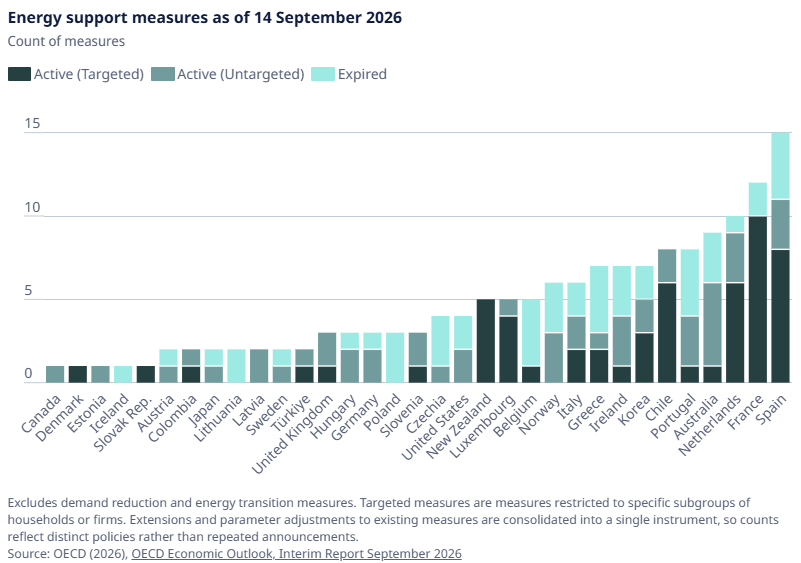
Thus far, wider economic impacts of shock from the conflict in the Middle East were cushioned by supply adjustments: rerouting of oil transports, additional energy supply from outside the Gulf, drawdowns of oil reserves and some switching to alternative commodity inputs, as well as widespread reintroduction of discretionary government support measures. A significant reduction in consumption helped balance the market.
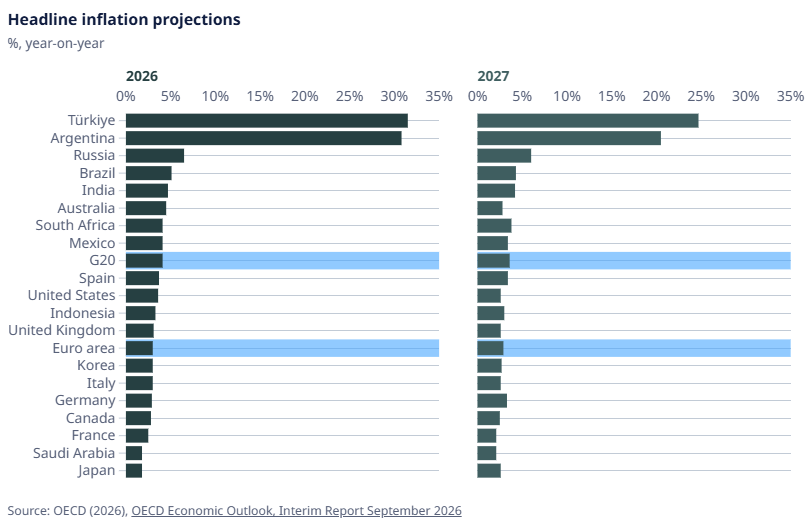
Inflation expected to remain elevated for longer
A renewed energy price shock in September is expected to keep inflation higher for longer. G20 headline inflation is projected to rise to 4.1% in 2026 before easing to 3.6% in 2027. Core inflation in the advanced economies is anticipated to moderate from 2.7% in 2026 to 2.5% in 2027.
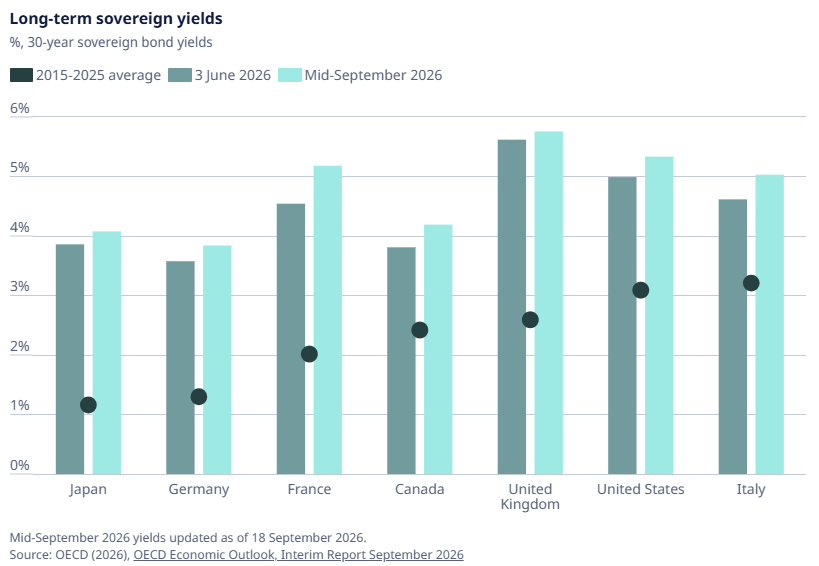
Rising long-term sovereign yields increase fiscal pressures
Long-term sovereign borrowing costs have risen further, with 30-year government bond yields remaining elevated to levels unseen in the past decade or two.
Higher long-term interest rates are raising borrowing costs for governments and weighing on equity valuations.
AI investment expectations may prove difficult to sustain
Planned capital expenditure by major technology and cloud-computing companies continues to rise rapidly. Current investment plans imply expectations of substantial future earnings, especially for semiconductor producers.
Energy support should remain targeted and temporary
Rising energy prices are increasing pressure on governments to support households and businesses. While many past energy support measures have been phased out and are increasingly targeted, broad-based interventions remain common and can be costly. Any new support should be temporary, well targeted and designed to preserve incentives to reduce energy use.
OECD (2026), OECD Economic Outlook, Interim Report September 2026: Weathering Successive Shocks, OECD Publishing, Paris, https://doi.org/10.1787/f751d02b-en.
La Côte Invest Takeaway
The OECD's message is resilience with conditions attached: growth is holding up, but inflation is slow to recede and 30-year sovereign yields sit at multi-decade highs. For investors this is a double challenge — long-dated bonds no longer automatically cushion equity volatility, while equity valuations increasingly depend on lofty AI expectations actually being met.
At La Côte Invest we respond with discipline rather than directional bets. We keep fixed-income duration moderate, favour high-quality issuers and diversify equity exposure beyond the large technology names, so that AI's potential does not turn into concentration risk. Real assets such as gold continue to play a stabilising role against energy and geopolitical shocks. In a period of successive shocks, robust portfolio construction and regular rebalancing are worth more than any forecast.